



Product Description
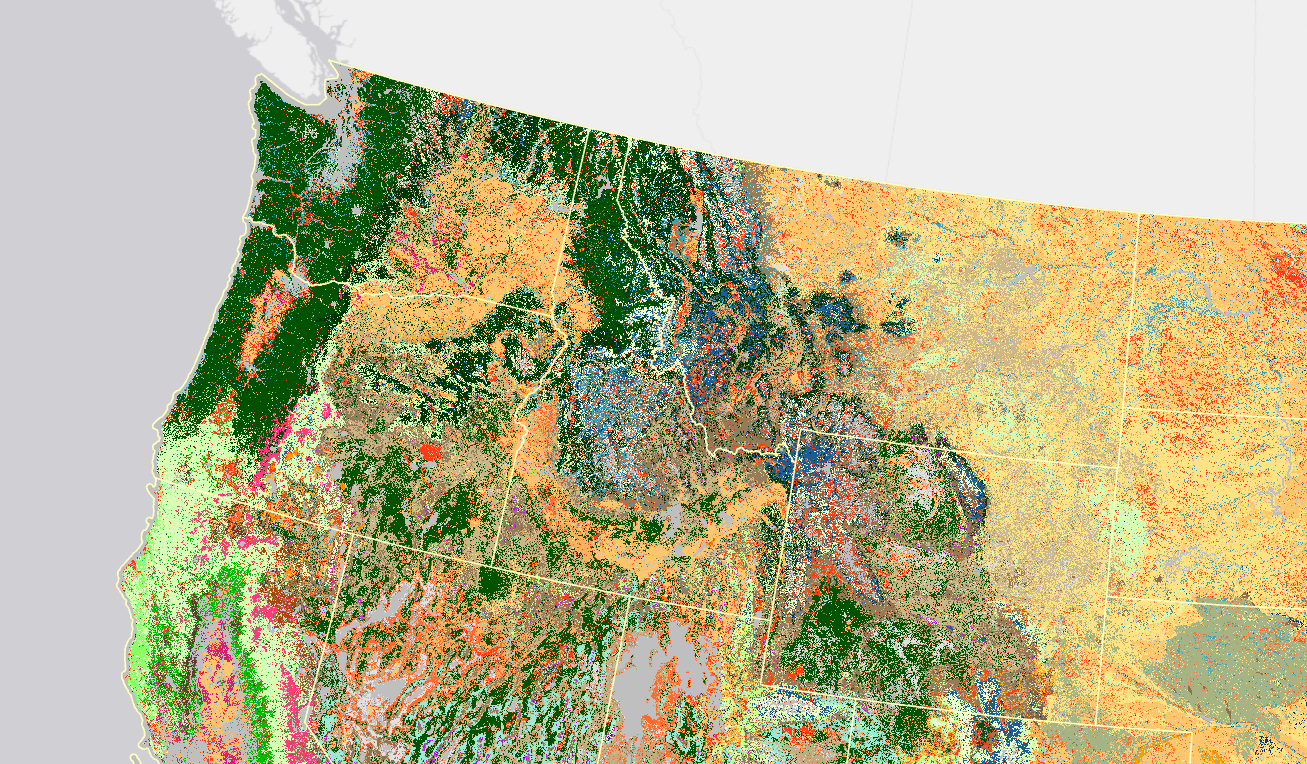 This page includes a general description of the product, please consult the schedule and version pages for information specific to each release.
The Fuel Characteristic Classification System (FCCS) defines a wildland fuelbed as the inherent physical characteristics of fuel that contribute to fire behavior and effects (Riccardi and others 2007). FCCS fuelbeds represent the structure and composition of wildland fuels and can accommodate a wide range of fuel characteristics in six horizontal fuel layers called strata (Ottmar and others 2007).
A fuelbed can represent any scale or precision of interest, but in LANDFIRE, FCCS fuelbeds are assigned for each 30 meter pixel based on a crosswalk between the LANDFIRE Fuel Vegetation Type (FVT) and the closest match within the FCCS fuelbed reference library. The FCCS library contains 460 fuelbeds that were developed to represent the geospatial diversity of ecosystems and management activities across North America. Fuelbed values were compiled from published literature, fuels photo series, other fuels data sets and expert opinion.
- The Fire and Fuel Tools webtool (FFT online) allows users to search the FCCS fuelbed reference library and perform FCCS and Consume calculations to summarize fuelbed biomass and total aboveground carbon and to predict surface fire behavior, crown fire potentials, fuel consumption, and emissions based on day-of-burn inputs.
The LF Fuels team collaborated with the Fire and Environmental Research Applications (FERA) team of the U.S. Forest Service Pacific Northwest Research Station on the FCCS product. To support disturbance transitions, FCCS disturbance fuelbeds were generated to represent the five major disturbances supported in LANDFIRE updates (See Fuel Disturbance Attribute Table). The LF FCCS is delivered with attributes summarized from the FCCS calculator for each fuelbed, including name and fuel loading information in tons per acre. This information can be used for fire behavior and fire effects estimations.
Consume Input Tables are formatted for use in the Consume 4.2 calculator embedded in the FFT software. Fuel loading units are in tons per acre and can be used in the command line version of Consume. This table can be used in conjunction with the LF FCCS layers in a mapping program, and be cross walked via the FCCSID in column B.
First Order Fire Effects Model (FOFEM) Input Tables provide fuel loading values summarized for use in the general FOFEM calculator. The file is not formatted for use in the FOFEM batch feature in the program. Fuel loading units are tons per acre and with additional fuel moisture and site descriptors this file can be adapted to work in the FOFEM batch function. This table can be used in conjunction with the LF FCCS layers in a mapping program, and be cross walked via the FCCSID in column B.
Historically, ruderal and developed FVT classifications were crosswalked to FCCS fuelbeds based on four regional climatic zones. For LF 2025 update, it was determined that a more appropriate scale to classify these FVTs would be based on LANDFIRE mapzones. In previous productions, the size of the regional climatic zones encompassed multiple ecoregions that spanned a variety of ecological variables. By switching to mapzone classification, FCCS resolution is increased nationally and correlates the FCCS fuelbeds to the climatology and forest types specifically represented within each mapzone. This finer scale allows for a greater diversity of fuelbeds across developed FVTs compared to previous productions. In addition to changes to the ruderal and developed classifications, existing crosswalks for each geoarea were reviewed and updated as needed.
LF 2016 Remap and beyond includes a 90-kilometer buffer along the 1,500 miles of the eastern and southern borders AK shares with Canada. Then with the LF 2020 update, and future updates, for the Conterminous United States (CONUS) a 90-kilometer buffer into Mexico is also included.
FCCS Disturbance Transition Database
Notice
When using Microsoft Access to view a database downloaded from the internet, users may see a Security Risk Error that prevents the database from opening. As of September 2024, all Microsoft products block macros by default to prevent potential malicious activity. To unblock macros on trusted files, do the following:
- Open the folder in which the file is saved
- Right-click the file and select Properties
- Under the General tab, select the checkbox next to Unblock
- Click OK
To read more about Microsoft and blocked macros, click here.
Fuel Characteristic Classification System Fuelbeds Resources
LF Definitions, Quality, and Standards - provides information about contributors, metadata and data standards, data creation, and data testing. This document also provides details about our general data release process.
LF Dictionary - a “one-stop shop” general resource that provides information about products, Attribute Data Dictionaries (ADDs), data and metadata, and terms.
LF Version Comparison Table - view the version history for each individual product.
LF Naming Conventions - understanding the version number
FCCS Crosswalk for LF2025 - info on updated FCCS crosswalk
LF Definitions, Quality, and Standards - provides information about contributors, metadata and data standards, data creation, and data testing. This document also provides details about our general data release process.
LF Dictionary - a “one-stop shop” general resource that provides information about products, Attribute Data Dictionaries (ADDs), data and metadata, and terms.
LF Version Comparison Table - view the version history for each individual product.
LF Naming Conventions - understanding the version number
FCCS Crosswalk for LF2025 - info on updated FCCS crosswalk