Product Description

black and gray coloration in the upper NW corner of the USAspect defines downslope direction in degrees and represents the azimuth of the sloped surfaces across a landscape.

LF 2020 Update Aspect products are generated from 1 arc-second Digital Elevation Models (DEM) tiles (approximately 30 meter) downloaded November 9, 2021 from The National Map (TNM) Viewer (v2.0), part of the USGS 3D Elevation Program (3DEP) which provides the best available public domain raster elevation data of the conterminous United States (CONUS), Alaska, Hawaii, and insular areas. See metadata by extent for specific details regarding coordinate system and projection information.

See metadata by extent for specific details regarding coordinate system and projection information.

Note: LF 2020 topographic products are consistently calculated from true north, a correction from earlier topographic products where Aspect was calculated incorrectly. Users are advised to download the LF 2020 topographic products for CONUS, HI, AK, and PRVI to replace any LF topographic products previously downloaded. We also advise that Landscape GeoTIFF (landscape) files created from earlier topographic products be re-created using the LF 2020 topographic products.

LF 2016 Remap and beyond includes a 90-kilometer buffer along the 1,500 miles of the eastern and southern borders AK shares with Canada. Then with the LF 2020 update, and future updates, for the Conterminous United States (CONUS) a 90-kilometer buffer into Mexico is also included.


Aspect Resources

Product Description

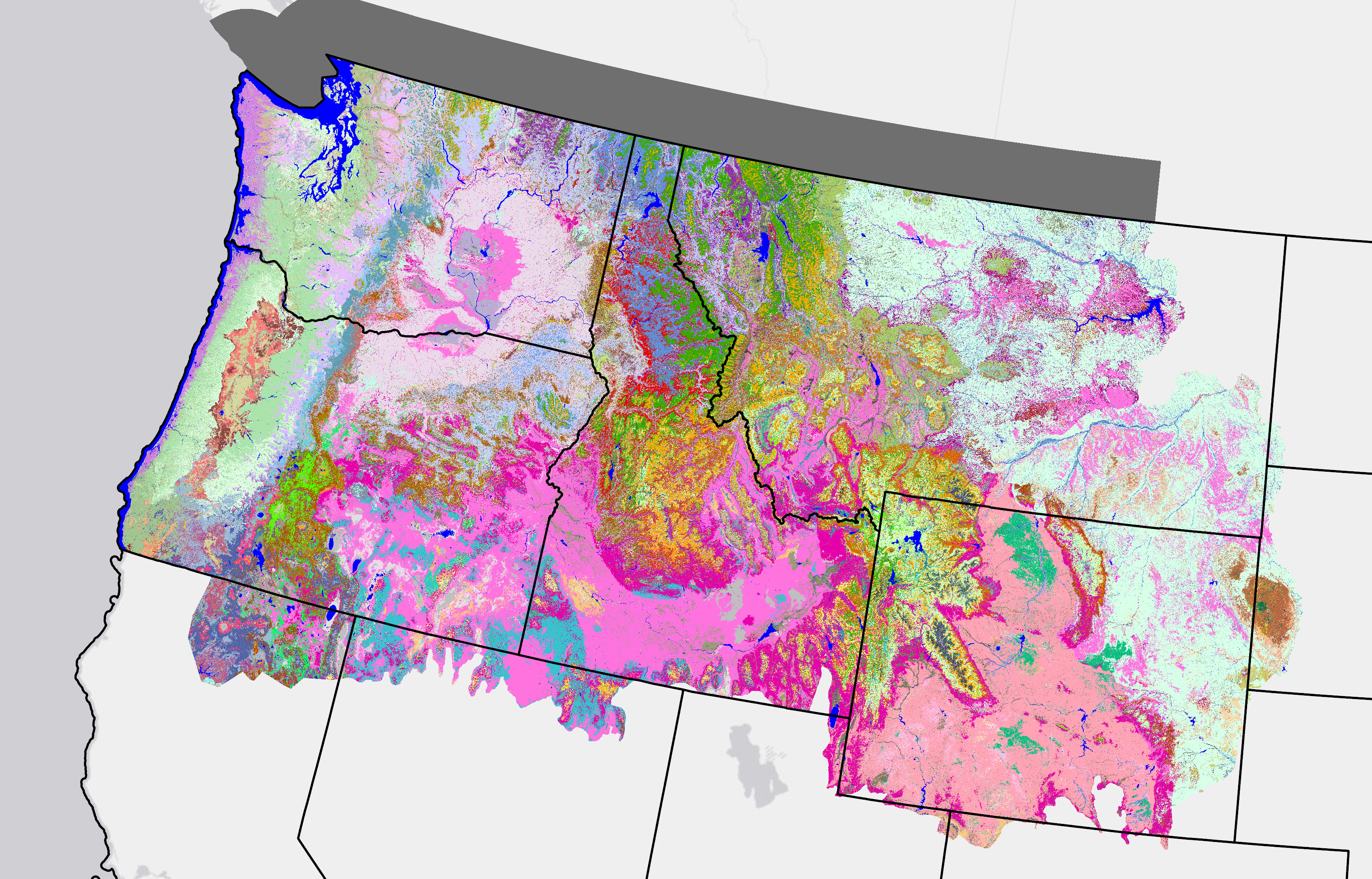
Graphic showing red and black area in the upper northwest corner of the U.S.

Historical Disturbance data is available by request only through the HelpDesk.

This page includes a general description of the product, please consult the schedule and version pages for information specific to each release.

LANDFIRE (LF) disturbance products are developed to provide temporal and spatial information related to landscape change. Historical Disturbance (HDist) is developed from the base LF Disturbance products (and attribute code system) to represent the 'history of disturbance' for a 10-year span. Each year's disturbance scenarios are checked against time relevant LF vegetation to check for logical inconsistencies. Errant disturbance codes are flagged and updated to a discard code with the remaining disturbance codes cross walked to Fuel Disturbance (FDist) codes. HDist development involves a comprehensive review of fuel and disturbance attributes.

Starting with LF 2016 Remap, and beyond, HDist replaces Vegetation Disturbance from previous LF versions incorporating pre-disturbance vegetation logic (based on disturbance year and vegetation type).

LF 2016 Remap and beyond includes a 90-kilometer buffer along the 1,500 miles of the eastern and southern borders AK shares with Canada. Then with the LF 2020 update, and future updates, for the Conterminous United States (CONUS) a 90-kilometer buffer into Mexico is also included.

LF uses HDist in the development of several subsequent layers, including the FDist product.


Historical Disturbance Resources