The website will be offline from Wednesday the 27th of May 2026 at 8:00 AM to Wednesday the 27th of May 2026 at 12:00 PM. We apologize for any inconvenience this may cause.

Product Description

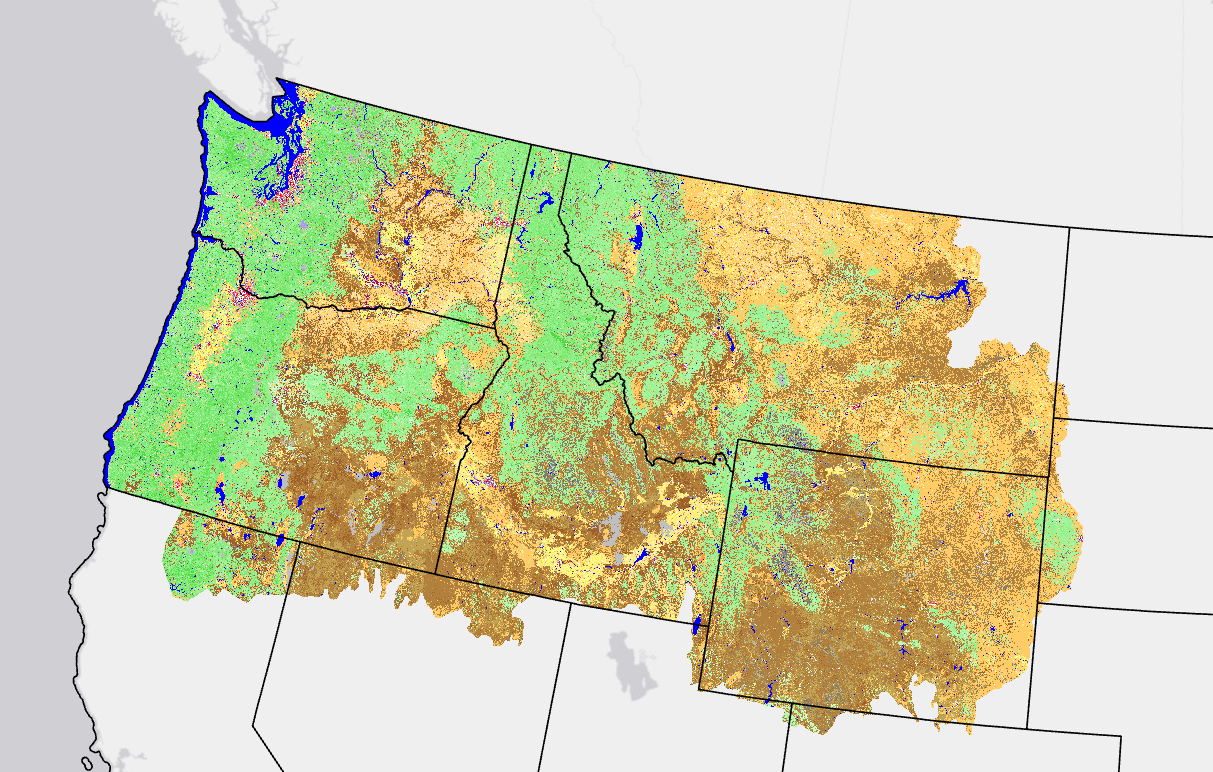
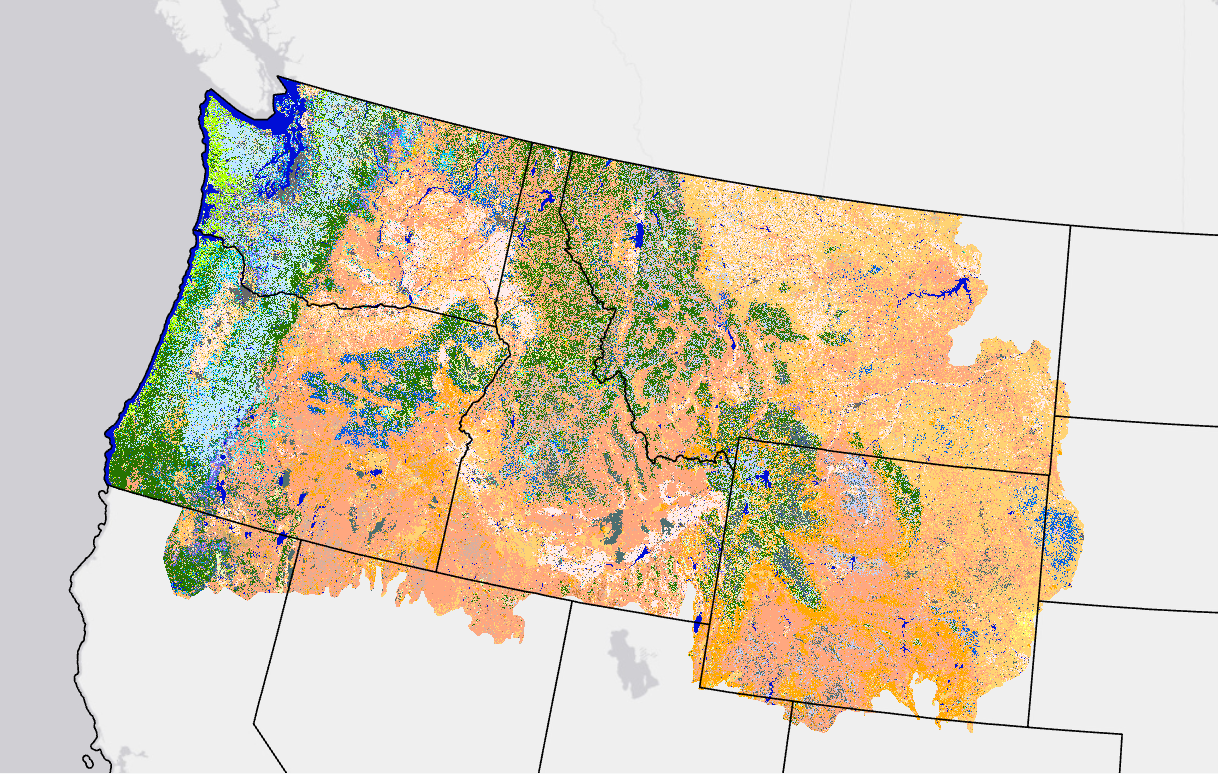
Image showing FBFM40 colors in the Upper NW corner of the U.S.This page includes a general description of the product, please consult the schedule and version pages for information specific to each release.
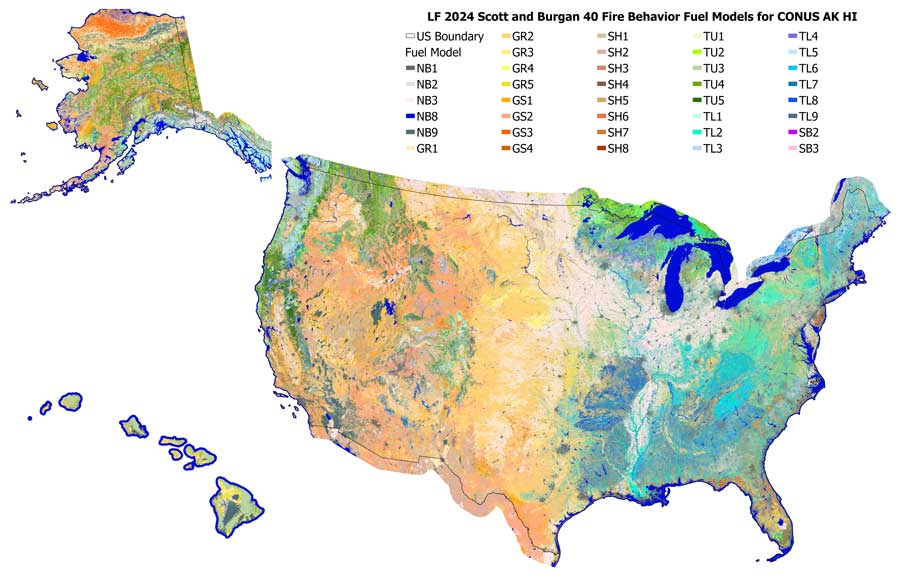
40 Scott and Burgan Fire Behavior Fuel Model (FBFM40) represents distinct distributions of fuel loading found among surface fuel components (live and dead), size classes, and fuel types. This set contains more fuel models in every fuel type (grass, shrub, timber, slash) than Anderson's set of 13. The number of fuel models representing relatively high dead fuel moisture content increased, and fuel models with an herbaceous component are now dynamic, meaning that loads shift between live and dead (to simulate curing of the herbaceous component) rather than remaining constant.

LANDFIRE's (LF) FBFM40 was evaluated through a series of workshops held across the nation with fire and fuels specialists. Workshop participants reviewed and adjusted surface fuel model rulesets using unique combinations of Existing Vegetation Type (EVT), Existing Vegetation Cover (EVC), Existing Vegetation Height (EVH), and in some cases Biophysical Setting (BPS).

Annual Disturbance products were first incorporated into fuel production during LF 2008. The introduction of this information allowed for informed changes to the assigned fuel models from disturbance type, severity, and time since the disturbance.

LF 2016 Remap and beyond includes a 90-kilometer buffer along the 1,500 miles of the eastern and southern borders AK shares with Canada. Then with the LF 2020 update, and future updates, for the Conterminous United States (CONUS) a 90-kilometer buffer into Mexico is also included.

Modeling Dynamic Fuels with an Index System (MoD-FIS) - refined FBFM40 classification based upon current estimates of FBFM40 from Landsat imagery for the current growing season. Where available, LF recommends using MoD-FIS data for fire behavior modeling in prescribed burn plans and during wildfires as this data reflects more current fuel conditions. For risk assessments, users should look to the Fire Behavior Fuel Model 40 annual releases which represent fuel condition averages for a fire season.


40 Scott and Burgan Fire Behavior Fuel Models Resources

Product Description

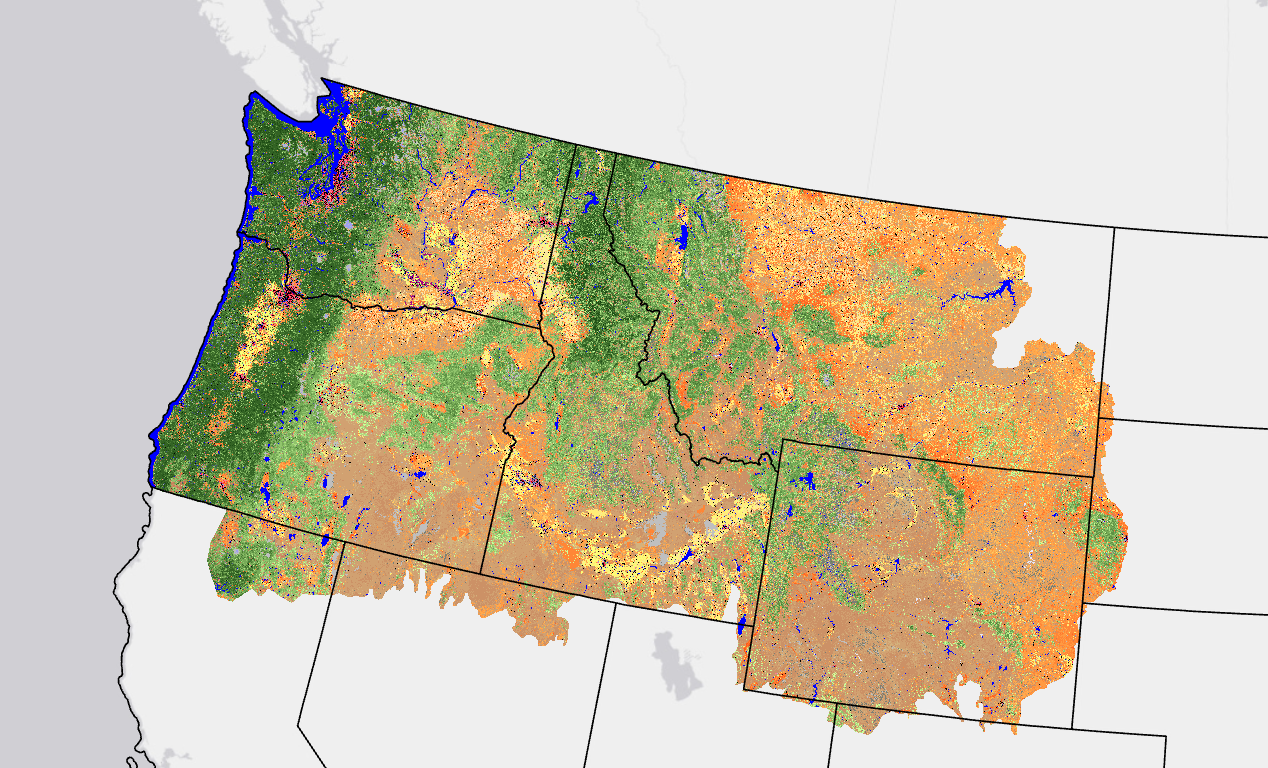
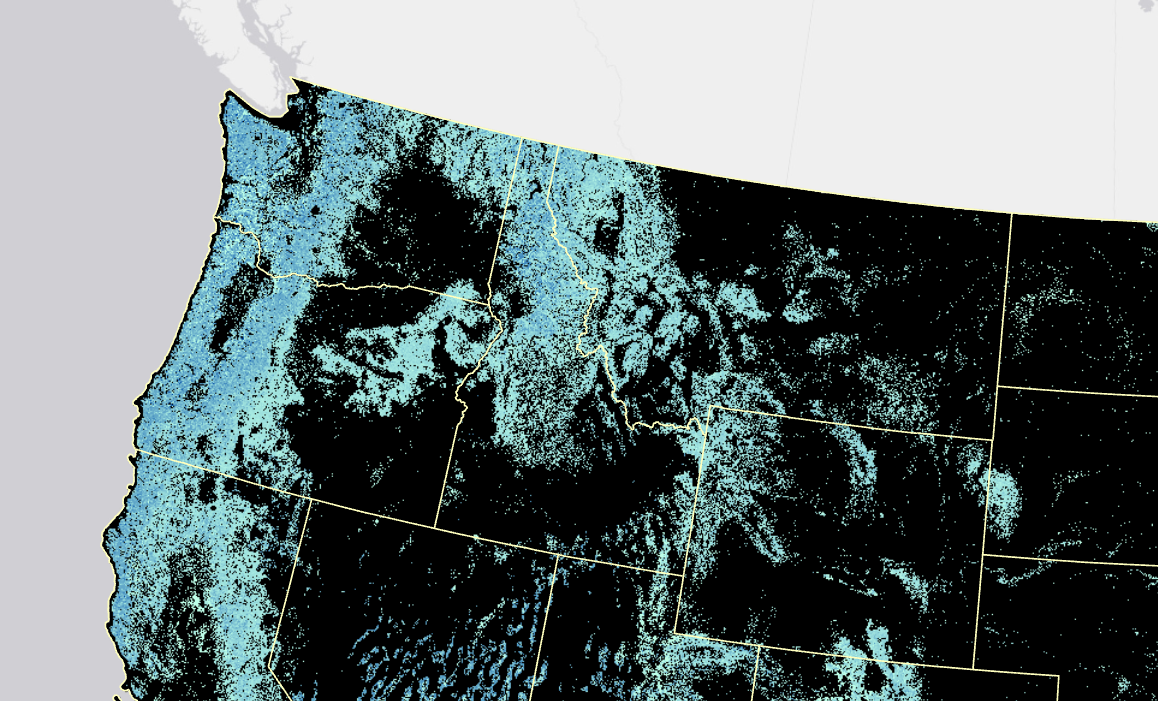
Image showing FBFM13 colors in the Upper NW corner of the U.S.This page includes a general description of the product, please consult the schedule and version pages for information specific to each release.
These original 13 standard fire behavior fuel models serve as input to Rothermel's surface fire behavior and spread model. LANDFIRE's (LF) 13 Anderson Fire Behavior Fuel Model (FBFM13) represents distinct distributions of fuel loading found among surface fuel components (live and dead), size classes, and fuel types. The fuel models are described by the most common fire-carrying fuel type (grass, brush, timber litter, or slash), loading and surface area-to-volume ratio by size class and component, fuelbed depth, and moisture of extinction.

FBFM13 was evaluated through a series of workshops held across the nation with fire and fuels specialists. Workshop participants reviewed and adjusted surface fuel model rulesets using unique combinations of Existing Vegetation Type (EVT), Existing Vegetation Cover (EVC), Existing Vegetation Height (EVH), and in some cases Biophysical Settings (BPS).

Annual Disturbance products were first incorporated into fuel production during LF 2008. The introduction of this information allowed for informed changes to the assigned fuel models from disturbance type, severity, and time since the disturbance.

LF 2016 Remap and beyond includes a 90-kilometer buffer along the 1,500 miles of the eastern and southern borders AK shares with Canada. Then with the LF 2020 update, and future updates, for the Conterminous United States (CONUS) a 90-kilometer buffer into Mexico is also included.


13 Anderson Fire Behavior Fuel Models Resources

The surface and canopy fuels products are representative of the particular type of disturbance experienced by herbaceous, shrub and tree lifeforms along with regrowth to the year indicated (usually the year released).

LANDFIRE (LF) fuel products describe the composition and characteristics of surface and canopy fuel and:

  • provide consistent fuel information to support fire planning, analysis, and budgeting to evaluate fire management alternatives
  • supplement strategic and tactical planning for fire operations
Fuel theme diagram


Product Description

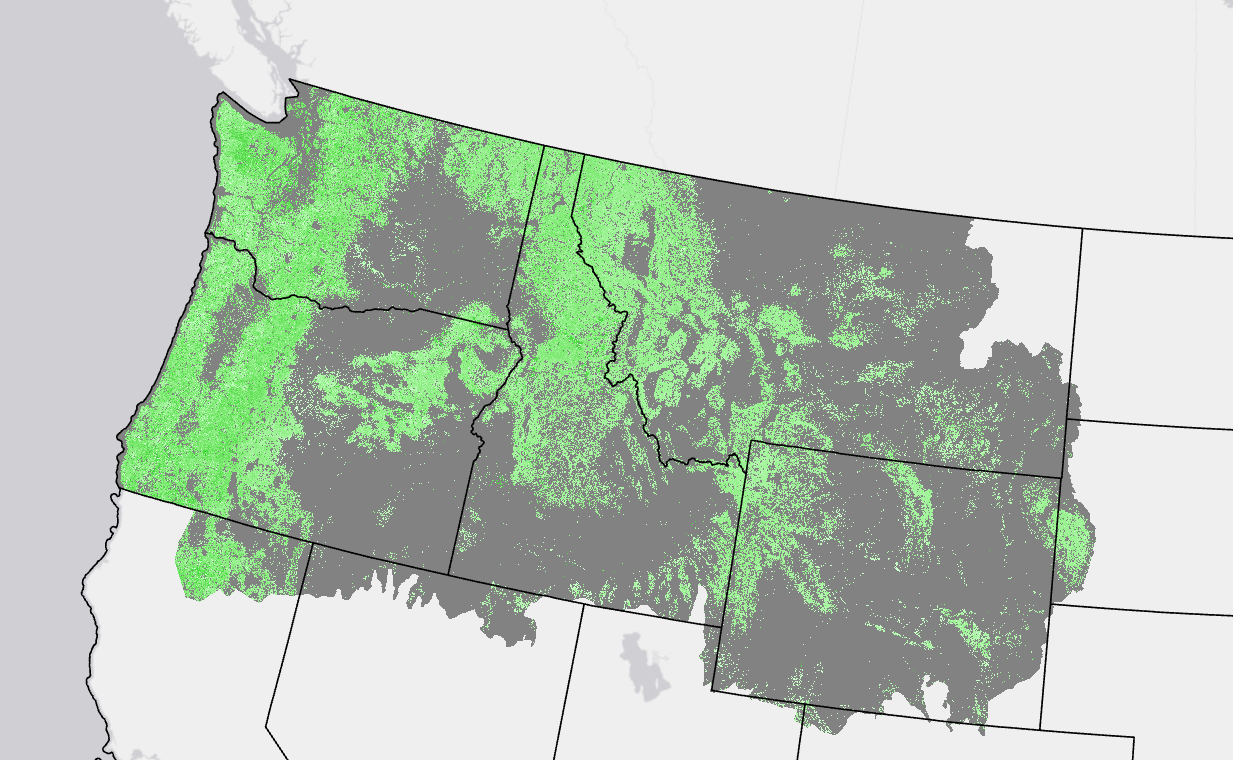
Vegetation Departure (VDep) indicates how different current vegetation on a landscape is from estimated past modeled conditions. VDep is based on changes to vegetation composition, structural stage, and canopy closure using methods originally described in the Interagency Fire Regime Condition Class Guidebook, but is not identical to those methods and should not be considered as a replacement data set. LANDFIRE (LF) VDep is based only on departure of current vegetation conditions from reference vegetation conditions, whereas the Guidebook approach includes departure of current fire regimes from those of the reference period.

VDep, a landscape metric, is scale dependent. Every pixel in a unique biophysical settings (BpS) in a summary unit has the same VDep value. These large landscape values may not represent smaller areas within a summary unit.

The VDep metric ranges from 0 - 100 and is based on 4 factors. These inputs are held constant within a single version of LF, but can be different across LF versions, which directly impacts VDep comparability across versions. VDep can be compared across versions but caution is advised.

VDep Factors

  • LF Mapped Current Conditions (SClass)
  • Estimated Reference Conditions
  • Included Types
  • Landscape Summary Unit
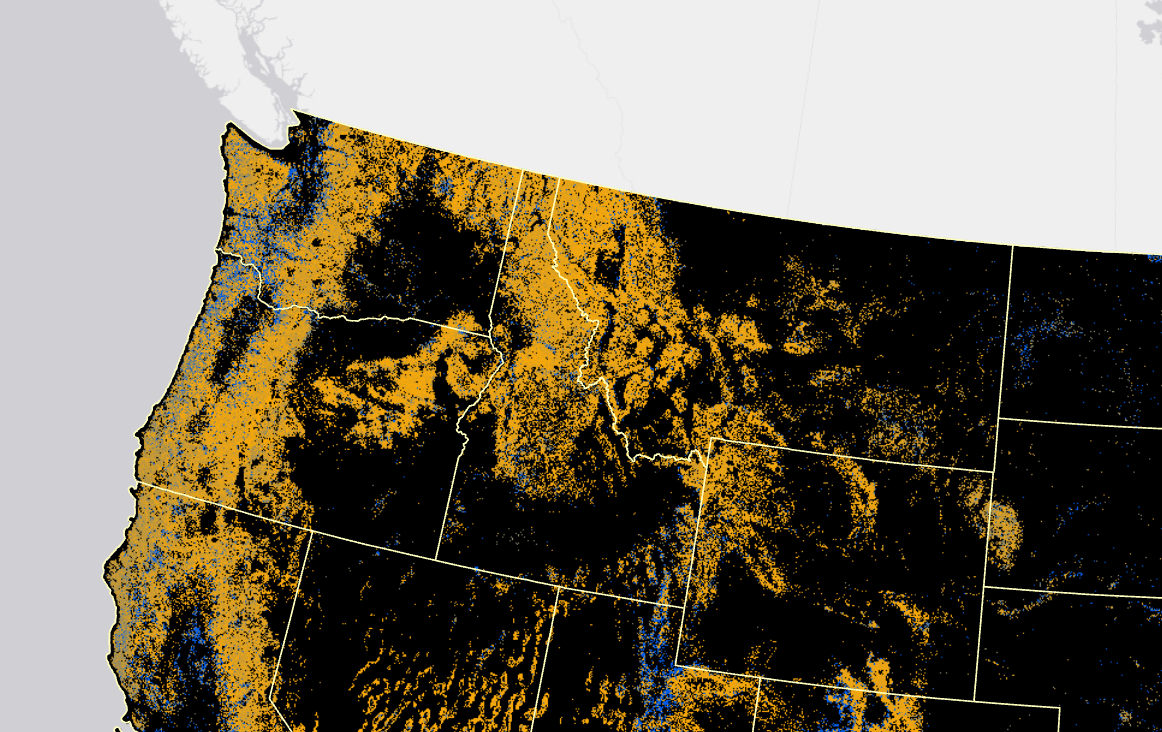
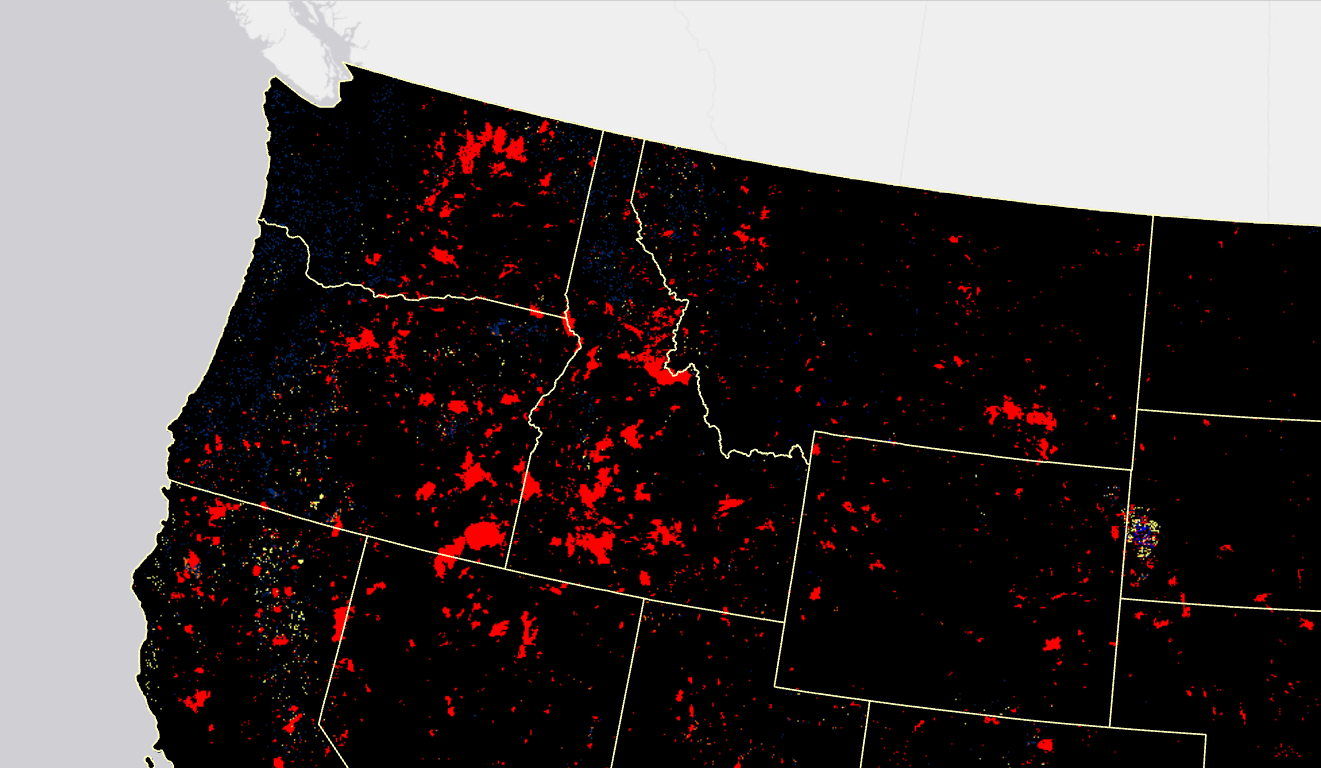
Image showing VDep colors over the Upper NW portion of the U.S.
FAQs

Vegetation Condition Class (VCC) and Vegetation Departure (VDep) are the same data that was previously called Fire Regime Condition Class (FRCC) and Fire Regime Departure Index (DEP). According to the FRCC Guidebook, FRCC was an interagency tool used to determine the degree of ecological departure from historical, or reference condition, vegetation, fuels, and disturbance regimes. FRCC, a combination of vegetation departure, fire frequency, and severity departure, were measures of vegetation departure, hence the name change.

LANDFIRE (LF) never delivered "full" FRCC product, even when the product carried that name, so it was renamed to reduce confusion.

FRCC is composed of two elements: Vegetation Departure and Fire Regime Departure. LF produced and delivered the first component of FRCC (Vegetation Departure) because LF had no consistent way to estimate Fire Regime Departure over the entire geography. Therefore, the product was renamed VCC since it is a more appropriate and descriptive name. VCC is just the current VDep product sliced into categories.

Refer to Succession Class (SClass), VDep and VCC metadata in each LF version for more information.

Note: VDep is not always created for all extents and/or all versions of LF. See the schedule page to learn more about each version.


Vegetation Departure Resources

Product Description

The Succession Classes (SClass) product characterizes current vegetation conditions with respect to the vegetation species composition (leaf-form and life-form, primarily), cover, and height ranges of the successional states that occur within each Biophysical Settings (BPS). SClass can also represent uncharacteristic vegetation components, including exotic species, tree plantations, canopy cover, etc. These components are not found within the compositional or structural variability of successional states defined for a BPS. Succession Classes do not directly quantify fuel characteristics of the current vegetation, but rather represent vegetative states with unique succession or disturbance related dynamics, such as structural development or fire frequency.

To produce SClass, mapping rules defined by local and regional experts during the original development and subsequent review of each BPS are applied to the relevant current vegetation layers. 


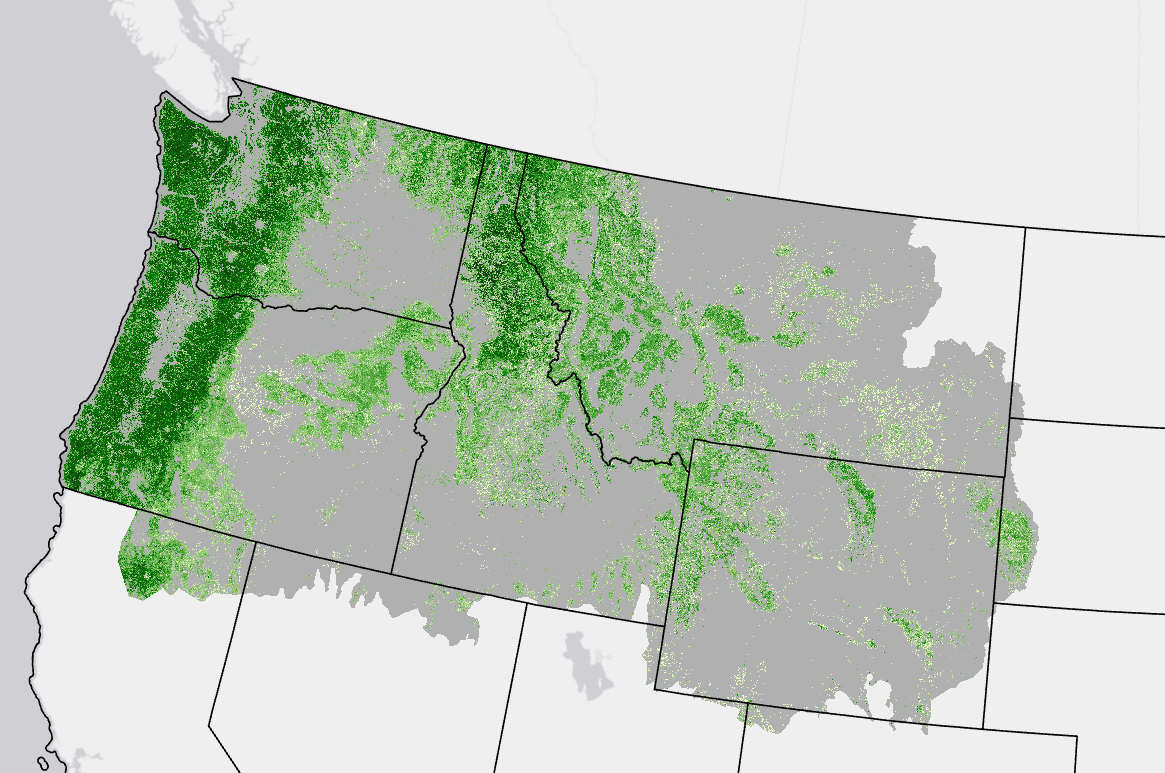
Image of the upper northwest corner of the U.S. with SClass data showing in green and pink.
SClass mapping rules for all natural BPS:


Note:   SClass is not always created for all extents and/or all versions of LF. See the schedule page to learn more about each version.


Succession Classes Resources

Graphic showing arrows to the cycle the BPS flowsLANDFIRE (LF) calls historic (pre-European settlement) ecosystems "Biophysical Settings," or BpS. To better understand how BpS functioned across the United States, LF worked with hundreds of experts to develop descriptions and models. The results are combined into "sets" or bundles that are available to anyone for free online.

The What and the How of BpS Models

LF used an expert-based development process to create state-and-transition models that describe pre-settlement ecosystem structure and function for every Ecological System present in the current LF BpS spatial dataset. Each ecosystem, which LF calls a Biophysical Setting (BpS), has a description document and a quantitative state-and-transition model including succession/growth and disturbance that can be viewed and manipulated in the free modeling platform SyncroSim.

LF used the BpS models to estimate reference conditions (sometimes referred to as "Natural Range of Variability" or NRV) for each BpS, which are then used to help evaluate ecosystem health through a departure metric called Vegetation Departure. The document "Using the LF Biophysical Settings Model Descriptions" examines major elements of the BpS descriptions and their uses. In addition, expert-developed models and descriptions are the source of LF's historic fire regime information.

8 column table with BpS codesCOLLABORATION BETWEEN LF + EXPERTS = MODELS
In 2015, LF began a multi-year project to review and improve the BpS data. The updated BpS model and description suite is now available for download below.

Vegetation dynamics models: a comprehensive set for natural resource assessment and planning in the United States
This article describes the ongoing development of a comprehensive set of vegetation reference conditions based on over 900 quantitative vegetation dynamic models and accompanying description documents for terrestrial ecosystems in the USA.


Supporting Information

Online resources for modelers include ApexRMS (ST-Sim developers), ST-Sim download, Forum and SyncroSim (ST-Sim) Online Documentation

How others use BpS Models

A variety of applications of BpS models have been described in project reports, meeting presentations, posters and journal articles. Examples include:


Download BpS Models and Descriptions

LF Biophysical Settings (BpS) products and format delivery include three options:
  1. Compiled databases in the Lower 48 States and Hawaii OR Alaska extents using links in the table
  2. BpS model information

    Biophysical Settings Models, Descriptions and Related Information

    • State-and-Transition Models: quantitative models of pre-European settlement ecosystem dynamics
    • BpS Descriptions: Full textual descriptions of each BpS, including model parameters and succession class rules
    • Reference Conditions: estimates of the percent of each succession class on the landscape prior to European settlement for each Ecological System
    • Succession Class Rules: Combinations of vegetation type, vegetation cover, vegetation height, leaf-form and life-form that are used by LF to map the current extent of succession classes
    • Metadata: FGDC compliant metadata for the BpS models and descriptions
  3. Spatial data - learn more

Unsure of which model you need? Use the searchable BpS website to locate and download specific BpS models and descriptions.


Product Description

LANDFIRE's (LF) Environmental Site Potential (ESP) represents the vegetation that could be supported at a given site based on the biophysical environment.

Map units are based on NatureServe's Ecological Systems classification and represent the natural plant communities that may have been present during pre-Eurpopean colonization. ESP map units represent the natural plant communities that would become established at late or climax stages of successional development in the absence of disturbance. They reflect the current climate and physical environment, as well as the competitive potential of native plant species. The ESP concept is similar to that used in classifications of potential vegetation, including habitat types and plant associations.

In early versions of LF, ESP was used to inform the existing vegetation and fuel mapping processes.

This product was not developed after LF 2014.


Environmental Site Potential Resources

Product Description

LANDFIRE's (LF) Biophysical Settings (BPS) is a modeled representation of the vegetation system that may have been dominant on the landscape prior to Euro-American settlement and is based on both the current biophysical environment and an approximation of modeled past disturbance regimes. LF uses BPS to depict reference conditions of vegetation across landscapes. Environmental Site Potential (ESP) reflects the climate and soil potential of the site, and BPS modifies that with typical disturbance for the region.

Map units are based on NatureServe's Ecological Systems classification and represent the natural plant communities that may have been present during the reference period. Each BPS map unit is matched with a model of vegetation succession. The actual time period for this data set is a composite of both the modeled context provided by the fire regime and vegetation dynamics models and the more recent field and geospatial inputs used to create it.

LF 2014 and earlier versions: BPS is unchanged from LF National's BPS except for updates made to water, barren, and snow classes (additions or removal), so that non-vegetated cover types within the BPS product matches LF existing vegetation and fuel products.

LF 2016 Remap and beyond: For the release of LF 2016 Remap, the below suite of Historic Fire Regime products were nested within the BPS product as attributes. Then, in 2024, Historic Fire Regime products became stand-alone products once again. These products can now be found in both places, as attributes of BPS and as their own products.

  • Fire Return Interval (FRI)
  • Percent Fire Severity (PFS)
  • Fire Regime Groups (FRG)

LF 2016 Remap and beyond includes a 90-kilometer buffer along the 1,500 miles of the eastern and southern borders AK shares with Canada. Then with the LF 2020 update, and future updates, for the Conterminous United States (CONUS) a 90-kilometer buffer into Mexico is also included.


Image showing colors of BPS in the upper north west corner of the US.

Related Product: The Succession Class (SClass) product characterizes current vegetation conditions with the composition, cover, and height ranges of the successional states that occur within each Biophysical Settings (BPS).


Biophysical Settings Resources

Product Description

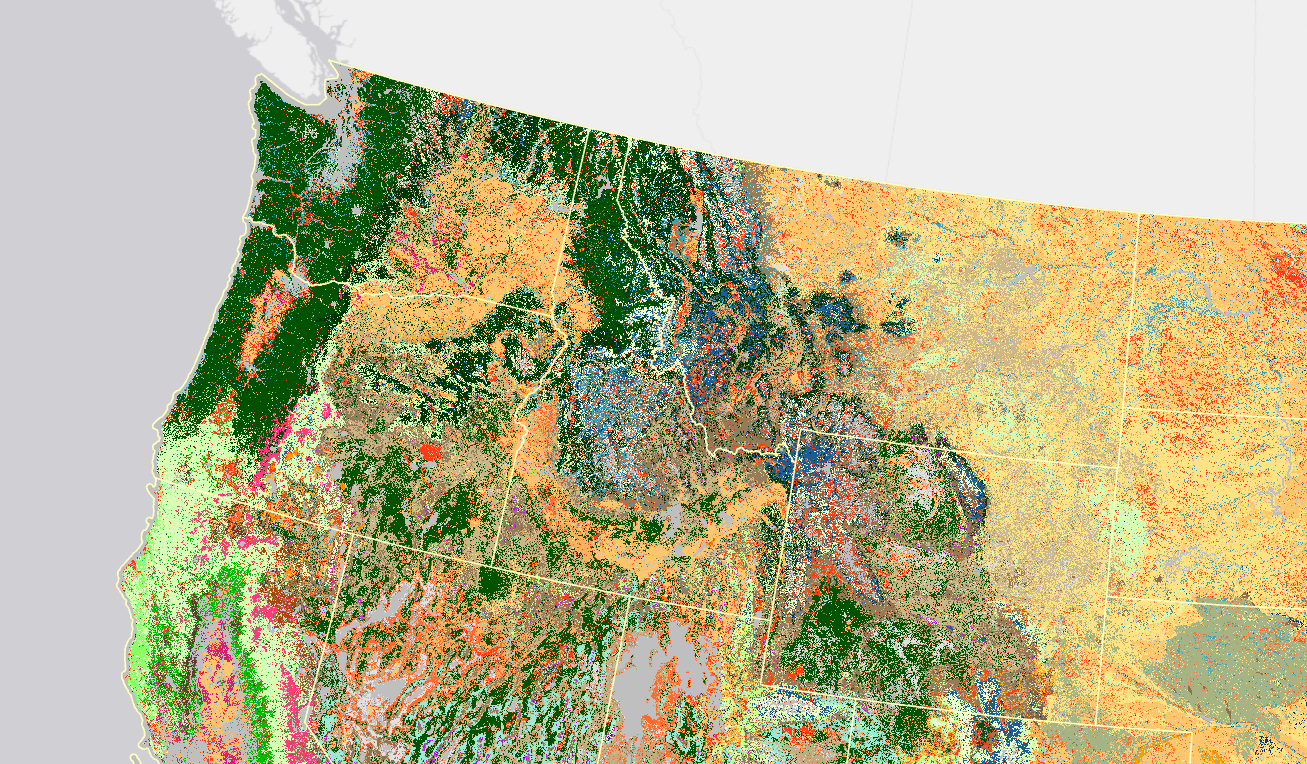
Image showing colors for EVT-NVC in the upper north west corner of the US.LANDFIRE's (LF) Existing Vegetation Type National Vegetation Classification (EVT-NVC), an existing vegetation layer created with a new mapping process and delivered as a separate spatial data layer for the first time with LF 2016 Remap, represents the current distribution of vegetation groups within the U.S. National Vegetation Classification circa 2016. These groups are defined as combinations of relatively narrow sets of diagnostic plant species, including dominants and co-dominants, broadly similar composition, and diagnostic growth forms. LF Remap used U.S. EVT-NVC 2.0 to map LF EVT-NVC.

The LF EVT-NVC product also includes ruderal or semi-natural vegetation types. The LF Ruderal EVT-NVC Groups Descriptions for CONUS provides descriptions for each ruderal EVT-NVC Group including species, distribution, and classification information.

EVT-NVC groups were initially mapped using decision tree models informed by field reference data, Landsat imagery, elevation/topographic, and biophysical gradient inputs.

  • Decision tree models were developed separately for each life-form including tree, shrub, herbaceous, and sparse vegetation.
  • Disturbance products were included in LF Remap products to describe areas on the landscape that have experienced change within the previous 10-year period.
  • LF EVT-NVC was reconciled through QA/QC measures to ensure lifeform is synchronized with both Existing Vegetation Cover and Existing Vegetation Height.
  • When modeled results were poor for modeled EVT-NVC classes, rectification and/or cross-walking from existing ancillary datasets or Ecological Systems was performed to improve the quality of the product.

LF 2016 Remap for Alaska (AK) includes a 90-kilometer buffer along the 1,500 miles of the eastern and southern borders AK shares with Canada.

LF Remap Auto-Keys: Learn about the redesign of the Auto-Keys process, which is used to determine existing vegetation type classification based on plot data in the LFRDB — Developing Auto-Keys for LF Vegetation Mapping: 2014-2015 CONUS Project Report.

LF uses an assessment process that compares the EVT product for a pixel with the Auto-Key EVT assignment for a sample plot contained in that pixel. EVT-NVC is part of the assessment. Agreement assessments have been developed for each LF Remap CONUS GeoArea


National Vegetation Classification Resources

Product Description

Image in the upper north west corner of the US showing different colors for EVT.This page includes a general description of the product, please consult the schedule and version pages for information specific to each release.
LANDFIRE's (LF) Existing Vegetation Type (EVT-ES) represents the current distribution of the terrestrial ecological systems classification, developed by NatureServe for the western hemisphere, through 2016. A terrestrial ecological system is defined as a group of plant community types (associations) that tend to co-occur within landscapes with similar ecological processes, substrates, and/or environmental gradients.

The LF Ecological Systems Descriptions for CONUS
     » provides descriptions for each Ecological System including species, distribution and classification information. 

Learn about the history of the Ecological Systems Classification developed by NatureServe


EVT-ES also includes ruderal or semi-natural vegetation types within the U.S. National Vegetation Classification. The LF Ruderal EVT-NVC Groups Descriptions for CONUS provides descriptions for each ruderal EVT-NVC Group including species, distribution, and classification information.

EVT-ES is mapped using decision tree models, field data, Landsat imagery, elevation, and biophysical gradient data.

  • Decision tree models are developed separately for each of the three lifeforms—tree, shrub, and herbaceous and are then used to generate lifeform specific EVT-ES layers.
  • Disturbance products are included in LF products to describe areas on the landscape that have experienced change within the previous 10-year period.

LF 2016 Remap and beyond includes a 90-kilometer buffer along the 1,500 miles of the eastern and southern borders AK shares with Canada. Then with the LF 2020 update, and future updates, for the Conterminous United States (CONUS) a 90-kilometer buffer into Mexico is also included.

For LF 2016 Remap there was a redesign of the Auto-Keys process, which is used to determine existing vegetation type classification based on plot data in the LANDFIRE Reference Database (LFRDB) — Developing Auto-Keys for LF Vegetation Mapping: 2014-2015 CONUS Project Report

LF uses an assessment process that compares the EVT-ES product for a pixel with the Auto-Key EVT-ES assignment for a sample plot contained in that pixel. Learn more about agreement assessments.

Flyout image of topography in northwest US
An example of how to create a map of EVT for CONUS utilizing sub-class bins


Existing Vegetation Type Resources